
Dan Hollings' PLAN For Passive Profit Income This short eBook report written by Dan Hollings…
Click to rate this post!
[Total: 0 Average: 0]
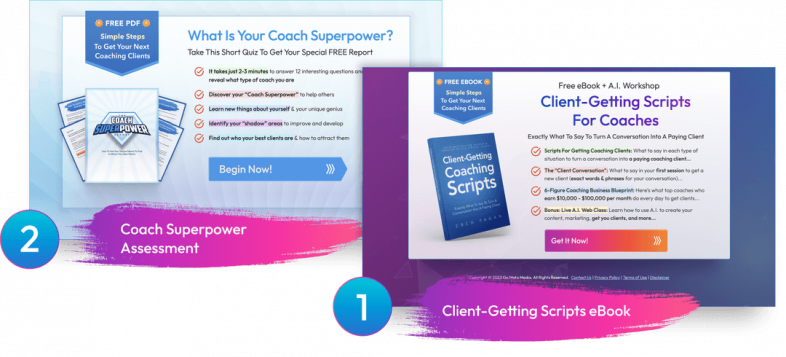
Quick-Read Book for Coaches by Eben Pagan
There are several key moments when a coach is talking with a potential client – from the first meeting to the follow-up proposal, and ultimately transitioning into selling a coaching package – that all require carefully crafted responses if you want to get a paying client.
We’ve done the “careful crafting” and organized all of the most important scripts coaches need into this quick-read book.
Inside, your audience will learn exact words and specific tactics that coaches can use to immediately start signing up clients to launch (or re-launch) their coaching business.
I have been collecting and creating these scripts over the past 25 years, and they are actually what I use myself… and they work great for coaches who use them.
This will get your audience excited as they learn, and they start seeing themselves in the role of a successful coach.
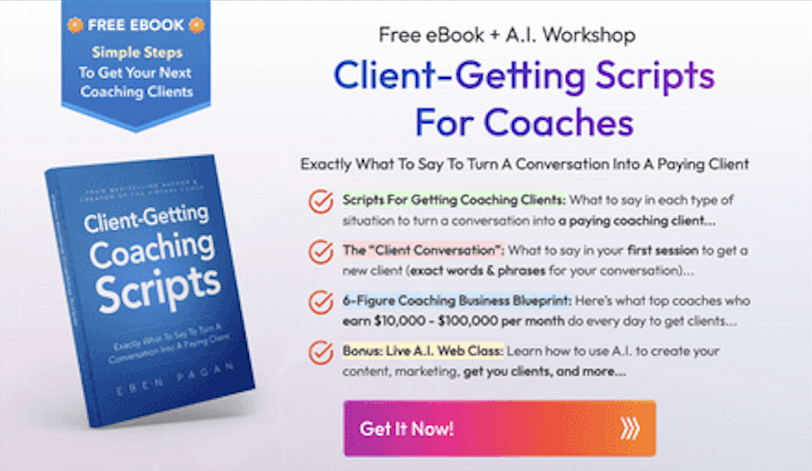
“The Client-Getting Script”
This will teach you the most powerful script to use when you are talking to someone and want them to buy your coaching package from you! It includes the exact words and phrases for each of those important moments when you’re talking to a great potential coaching client, and you want to offer your coaching services to them.
There’s a video included to explain everything and get you started using these scripts to get clients!
Quick Summary of the Client-Getting Scripts for Coaches book
What You’ll Learn Inside the Book?
- Scripts For Getting Coaching Clients: What to say in
each type of situation to turn a conversation into a paying
coaching client… - The “Client Conversation”: What to say in your first
session to get a new client (exact words & phrases for the
coaching presentation)… - Bonus: Video & Social Client Attractor Script: What to
say in your video or social post to get clients to call you for
coaching…
Eben Pagan Training & Coaching Review
Who is Eben Pagan?
 Eben Pagan is a highly successful self-made coach and trainer in the field of online business and marketing. He created many popular training programs for starting online entrepreneurs, business, and personal development coaches. In a nutshell, Eben teaches people how to find and develop your unique skill, start, and grow a successful coaching practice.
Who wouldn’t want to earn a good living while helping others with their goals and issues?
He has a unique approach to marketing and has become a trusted source of information on internet marketing. His books have been read by millions of people and have been translated into more than 20 languages. He is also a prolific podcaster and has made many popular videos on YouTube.
He is a well-known author of self-help books on success and wealth creation, and has also created a series of coaching courses to teach people how to succeed in their lives.
Over the last two decades Eben Pagan created many training programs, and all of them work in together to help students build their next-level coaching practice. These include a foundation course, coaching business strategy training, client acquisition training, sales funnel setup, follow up training, and marketing training.
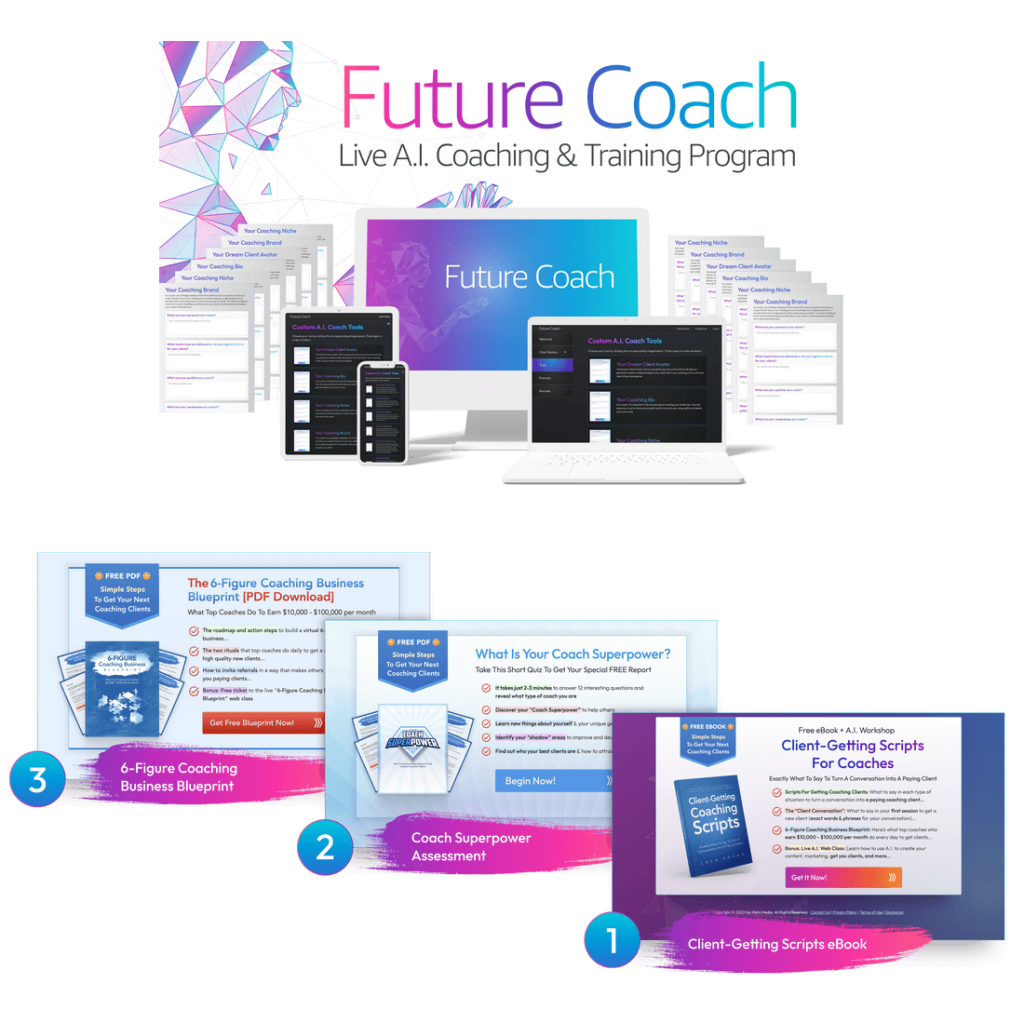
Future Coach EXPO and Training Program
The Coach EXPO is a week of powerful interviews and presentations from the top coaches in the world. Over 20 coaches with 7-figure coaching and teaching businesses, sharing their top strategies for building confidence, getting clients, and helping clients get great results!
This year we’ve got Jeff Walker, Marisa Murgatroyd, Evan Carmichael, Dean Graziosi, Claire Zammit, John Assaraf, Christian Mickelsen, Anthony Trucks, Suzanne Evans, Mark Lack, Brian Tracy, Ryan Levesque… and a bunch of others!
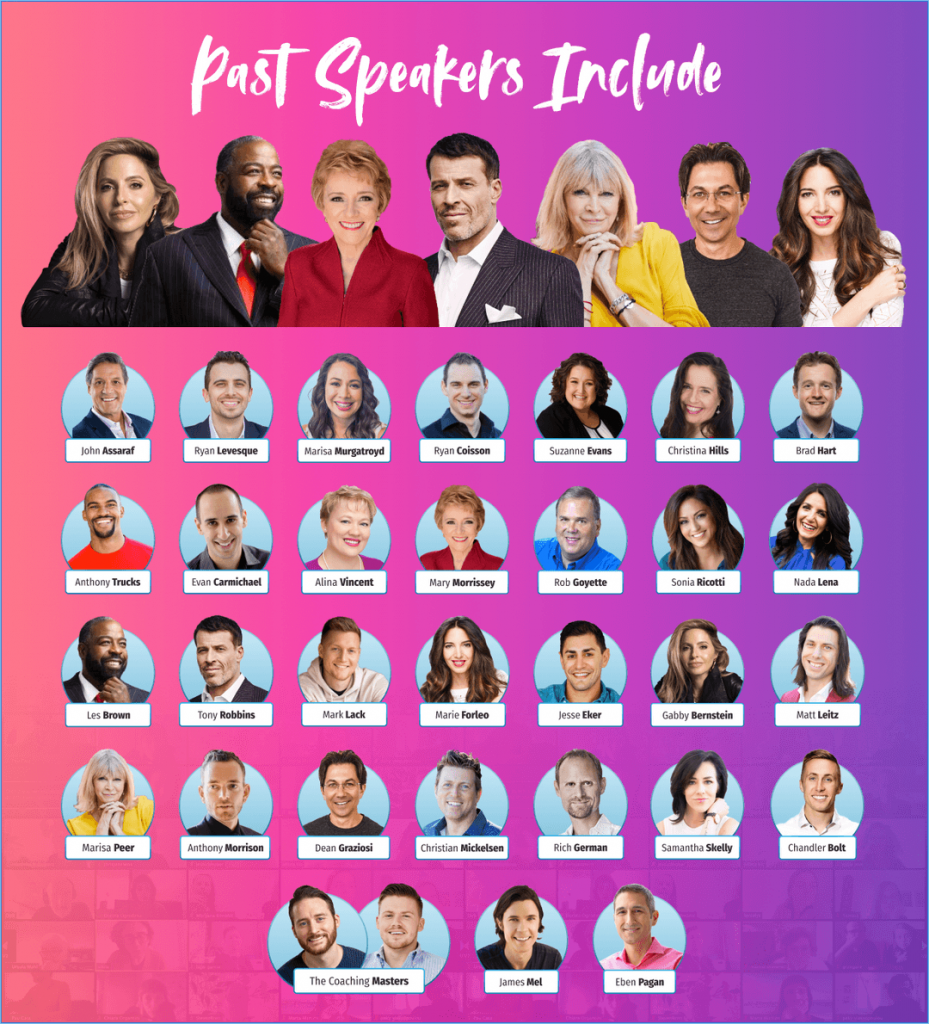
The Coach EXPO will be hosting coaches, speakers, and entrepreneurs talking about how to build successful businesses by following a simple formulas that have been proven time and again. The Future Coach system has worked for coaches from a variety of industries, including ecommerce owners, local business owners, consultants, bloggers, broadcasters, affiliate marketers, and vloggers. The coaching practice can be set up in a matter of weeks, which allows coaches to make money while helping others change their lives.
Find out more about Future Coach Training Program.
Virtual Coach – Main Flagship Training Program
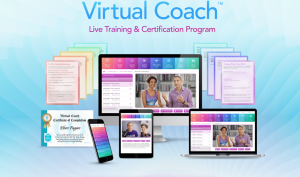
Virtual Coach is for many years the the main training program by Eben Pagan, that teaches you how to become a high-value, high-payed transformational coach. It teaches you how to build your own coaching practice and inspire other people in the process. It also provides you with various effective strategies for getting ideal clients. These are clients who will pay you for your services and be willing to take action on the advice you provide them with. In this bonus course, you will learn different techniques, mindsets, and wordings that will help you create and deliver powerful presentations that motivate your clients to invest in your coaching services.
Click to rate this post!
[Total: 0 Average: 0]
Table of Contents